
Virtual chargers
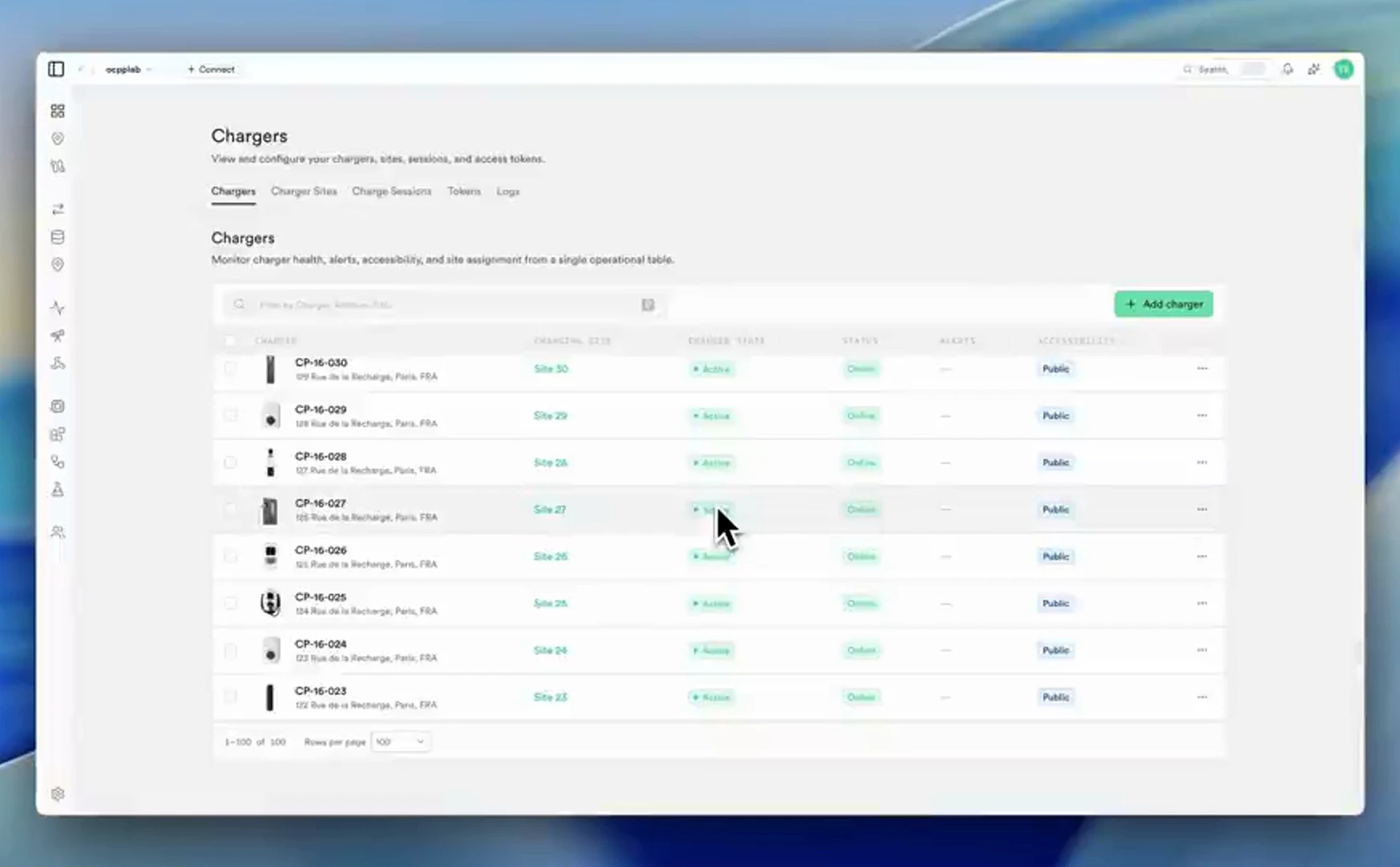
Start without hardwareDeploy a browser-based OCPP simulator with locations, connectors, sessions, logs, firmware, certificates, and OCPP configuration in one workspace — no physical EV charger required.
OCPP 1.6 and 2.0.1OCPI 2.1.1 and 2.2.1
Browser-based OCPP and OCPI emulator for CSMS and roaming QA. Spin up virtual charge points, inspect every message in real time, and share replayable logs with your team.
Set up a virtual charger in about 2 minutes. Free to start.
A quick view of the browser-based OCPP simulator and OCPI testing workspace your team uses to validate EV charging software against a CPMS.
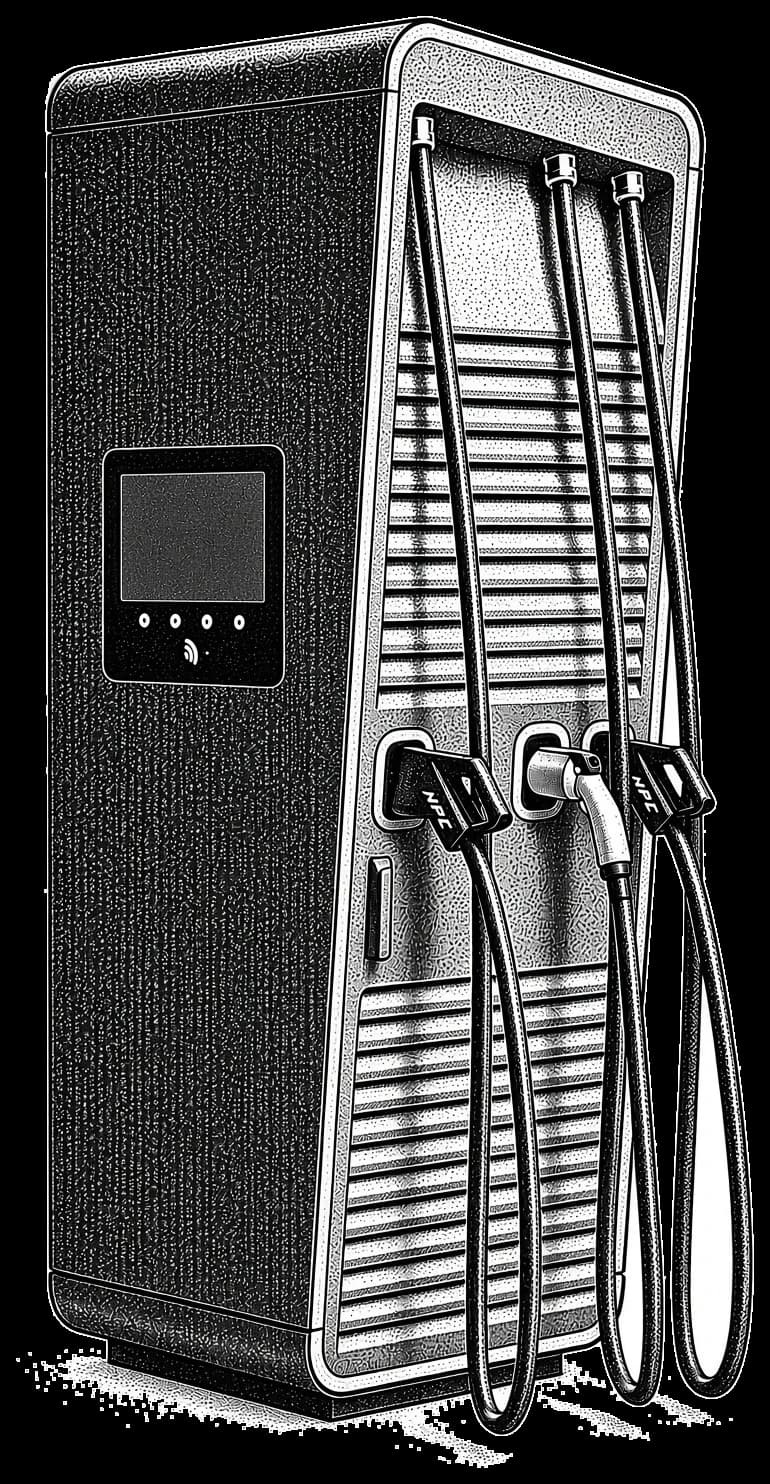
EV charger profile catalog
Simulate the EV charger profiles your team actually deploys.
Vendor-style profiles with realistic connector layouts, current types, supported kWh, and OCPP behavior for CPMS testing.
The workspace ships OCPP 1.6 / 2.0.1 and OCPI 2.1.1 / 2.2.1. EEBUS and Modbus are adjacent energy and industrial standards, not product modules.

Shipped in the workspace
The Open Charge Point Protocol is an application protocol for communication between electric vehicle charging stations and a central management system.
Shipped in the workspace
The Open Charge Point Interface is a protocol that connects charge point operators and e-mobility service providers, enabling EV roaming, location and tariff data, and the exchange of charging sessions and billing records between networks.

Adjacent standard — not a product module
EEBUS is a protocol suite for the Internet of Things that aims to standardize the interface between electrical consumers, producers, storages and (logical) managing entities.

Adjacent standard — not a product module
Modbus is a data communications protocol. It is a de facto standard communication protocol and widely used to connect industrial electronic devices.
Virtual chargers, protocol routing, roaming validation, and monitoring probes. One workspace, no hardware.
Deploy virtual chargers, run a roaming backend, and stress-test your system at scale in minutes.
Simulate any charger brand. Test your software compliance across OCPP 1.6 and OCPP 2.0.1 without physical hardware.
“Hardware labs still matter, but they should confirm behavior you already rehearsed. Make the first integration failure happen in a browser, not during a field rollout.”
An OCPP and OCPI simulator to deploy chargers, route traffic, test roaming, monitor health, and turn repeated checks into release workflows.
Deploy a browser-based OCPP simulator with locations, connectors, sessions, logs, firmware, certificates, and OCPP configuration in one workspace — no physical EV charger required.
Route charger traffic through OCPPLab, inspect every OCPP message, and reproduce CPMS integration failures before they reach production infrastructure.
Use the OCPI simulator to validate partner-facing locations, EVSEs, connectors, tokens, sessions, commands, charging profiles, and CDR-style workflows before go-live.
Send OCPP and OCPI actions from the browser, inspect responses, then turn repeated checks into reusable release workflows.
Run synthetic probes across EV charger, CPMS, and OCPI roaming paths so boot failures, slow responses, and broken endpoints show up early.
Ask questions about charging data, generate charts, inspect query results, and review proposed OCPP actions before sending them.
Test the protocol versions your team actually ships: OCPP 1.6, OCPP 2.0.1, OCPI 2.1.1, and OCPI 2.2.1. From the OCPP 2.0.1 simulator to OCPI testing for roaming, keep charger behavior, roaming flows, and regression coverage in one place.
Hardware labs and partner sandboxes are still important, but they are slow places to discover basic integration bugs. Use the OCPPLab simulator earlier in the release cycle for CSMS testing and to validate the behavior your team controls.
Replay the charger, authorization, transaction, or roaming path that failed without waiting for the same hardware state.
Create model-like EV charger profiles, connect them to your CSMS, and verify setup before devices arrive on site.
Check OCPI data and commands before a real CPO, eMSP, hub, or network partner is on the critical path.
Turn repeated manual checks into workflow runs with logs your team can inspect after every product change.
Virtual chargers on OCPP 1.6 and 2.0.1, plus OCPI 2.1.1 and 2.2.1, in the browser.

Answers about protocols, charger profiles, scale testing, security, and pricing.
Book a 30-minute demo and run a real scenario against your stack with our OCPP simulator. Or start free and launch your first virtual EV charger in minutes.
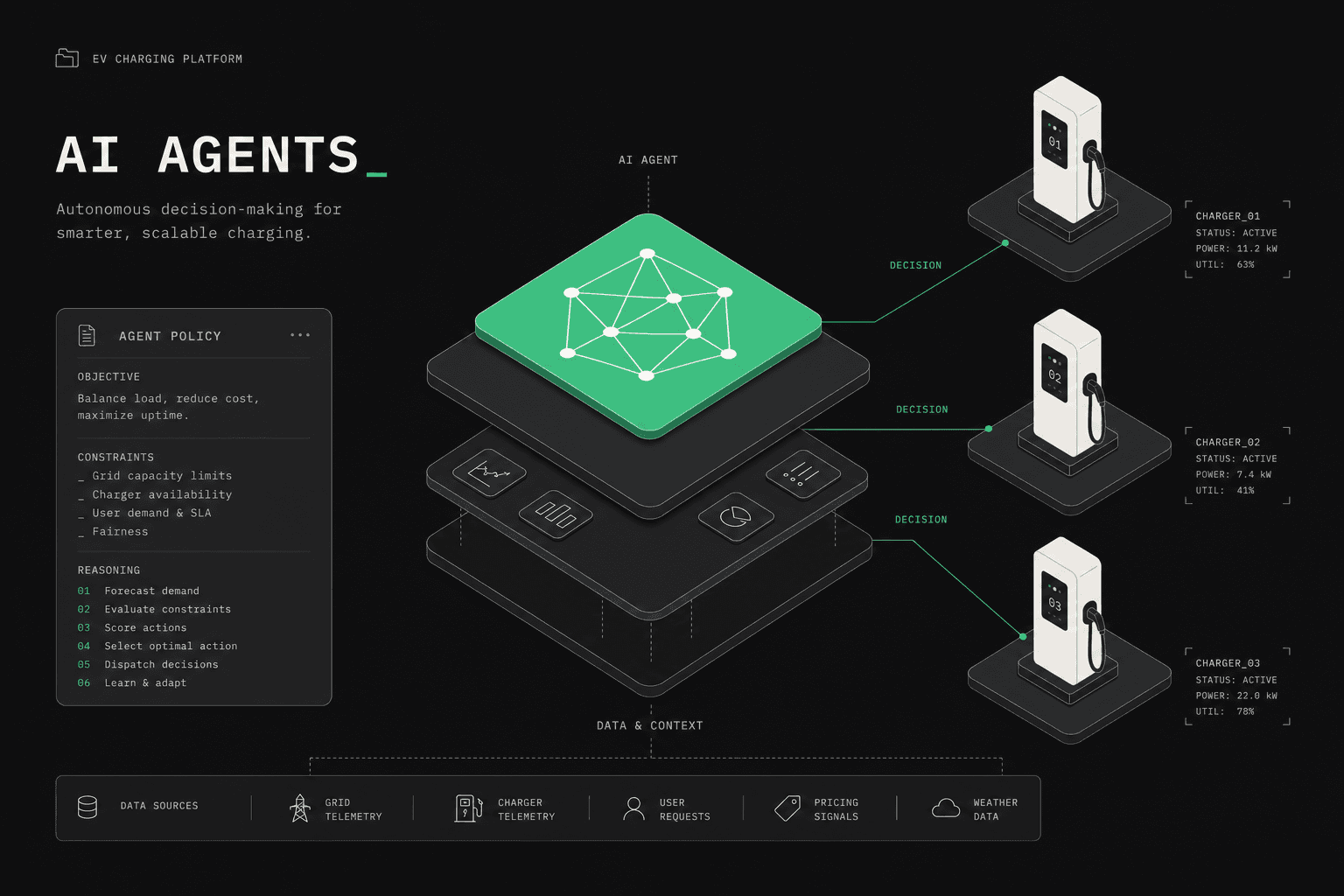
How OCPP AI agents automate EV charging across 5 use cases — fault diagnosis to smart charging — plus architecture, guardrails, and how to test them safely.
Read guide →
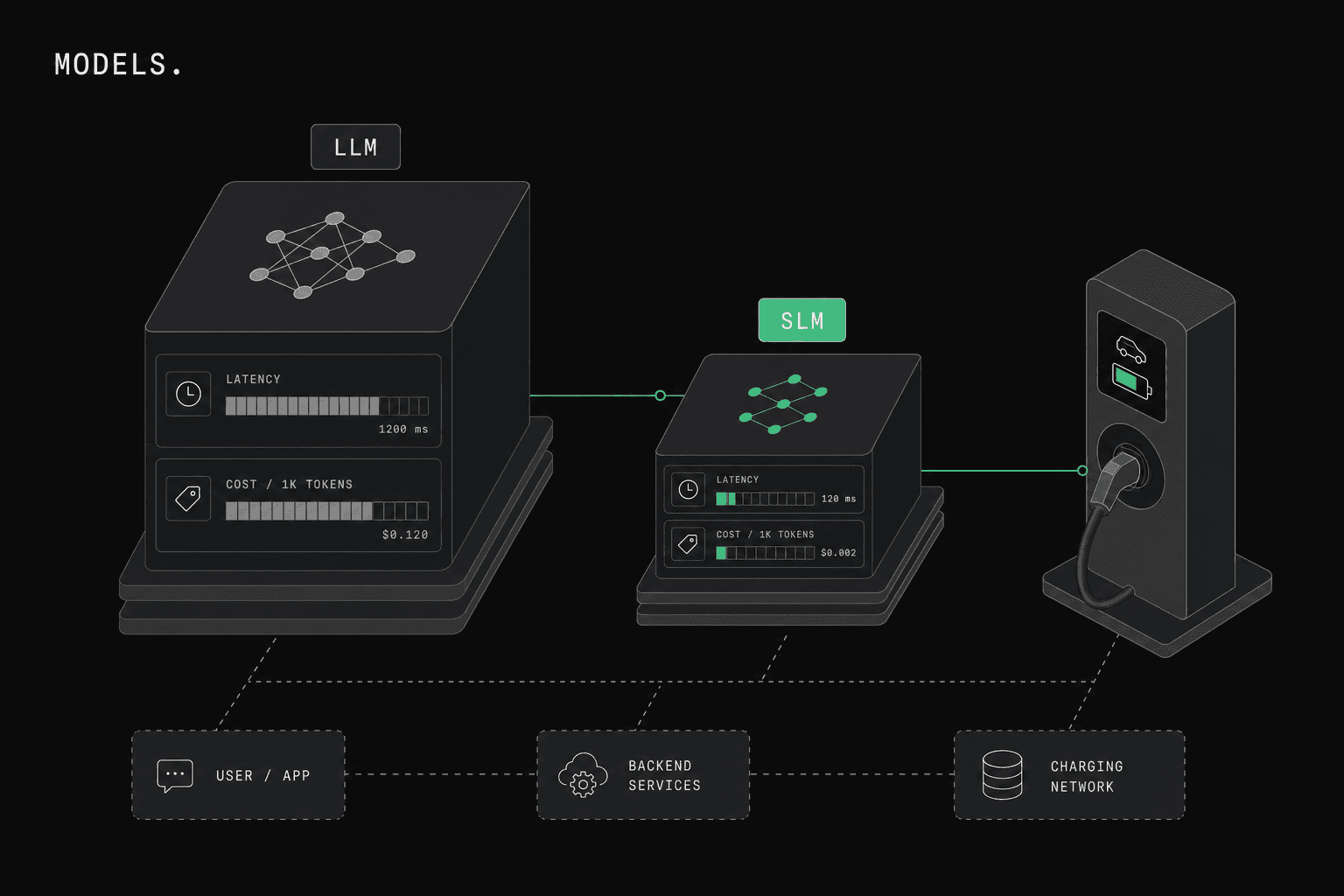
LLM vs SLM for EV charging software: when to use each across OCPP fault triage, edge monitoring, and AI agents, plus a hybrid pattern for 5,000+ chargers.
Read guide →
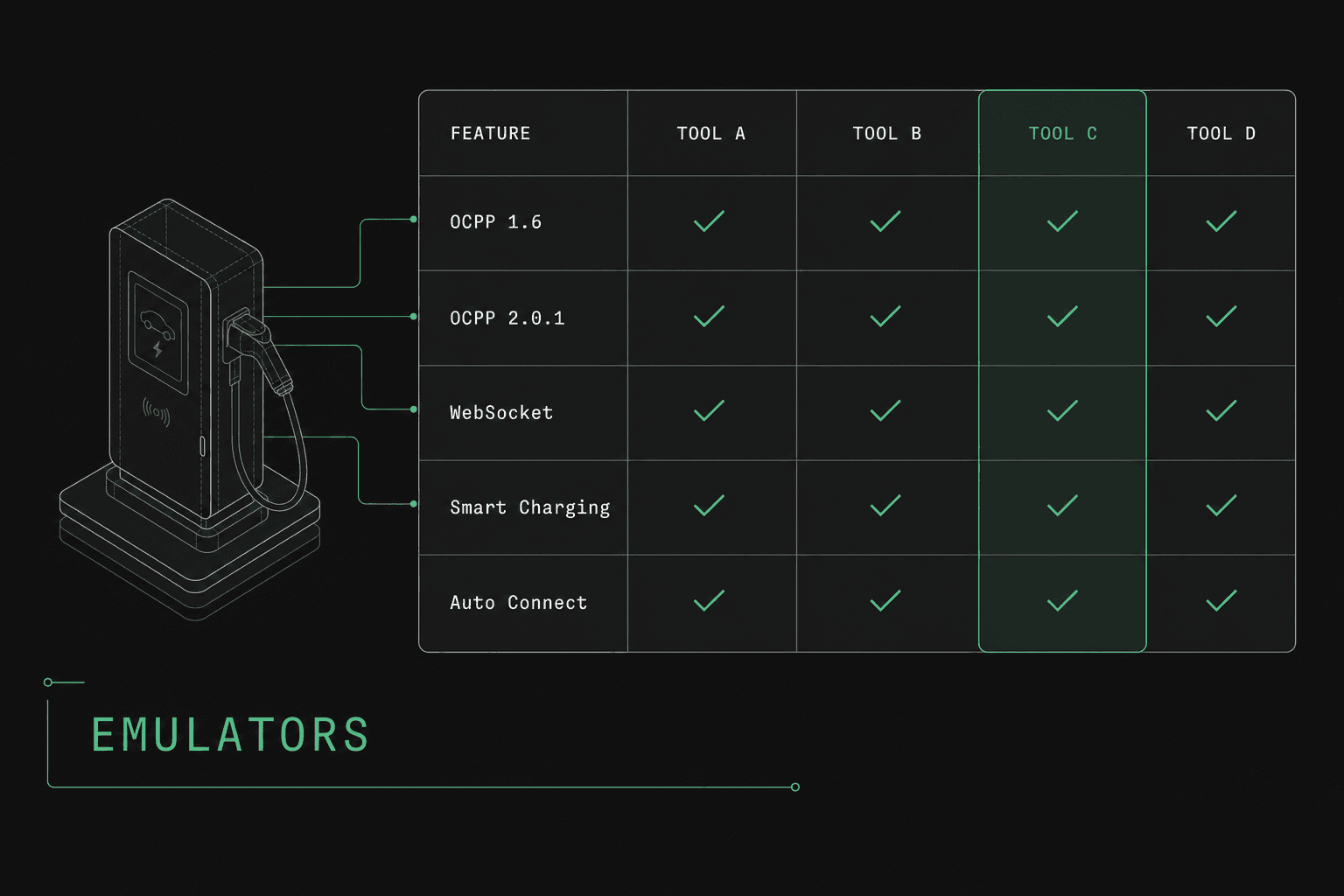
Compare the 4 best OCPP simulators and emulators for CPMS testing: cloud platforms, open-source libraries, and field tools for OCPP 1.6 and 2.0.1 workflows.
Read guide →
